
ORANGE COUNTY BRAND + WEB DESIGN FOR THERAPISTS
Websites and Branding for THERAPISTS who know TRUSTbegins BEFORE the first session.
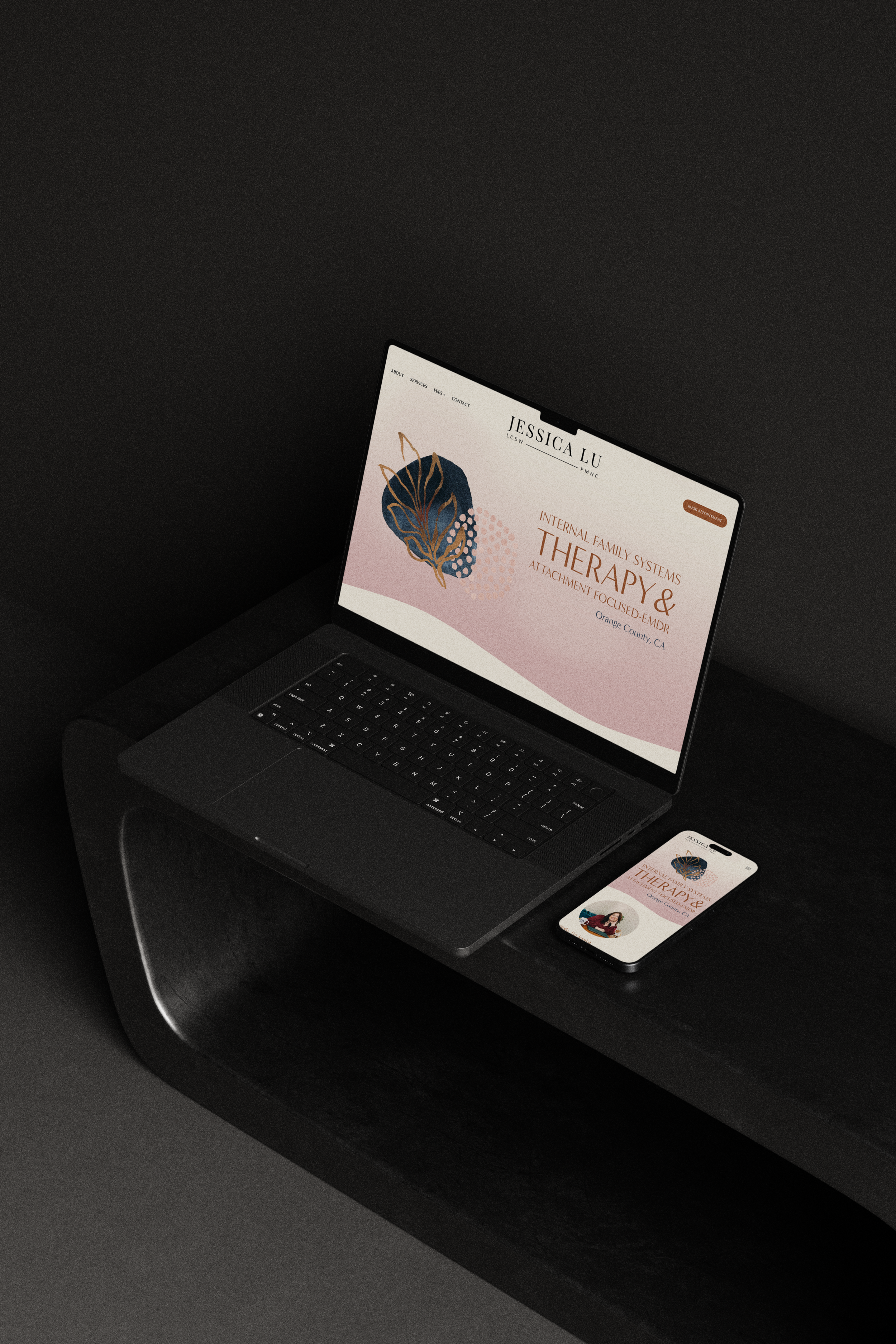

Choosing a therapist is rarely a purely practical decision. Long before someone fills out an intake form, they are looking for small but meaningful signals: warmth, clarity, a sense of recognition, a reason to pause instead of simply clicking away.
Your website cannot manufacture trust. But it can create the conditions for it.
I wrote more about what actually makes a therapy website feel safe to a prospective client here.
Squarespace Web Design for Therapists Who Want a Site That Actually Feels Like Them.
Before they reach out, they are already asking:
Could I Feel UNDERSTOOD Here?

Your WEBSITE is the FIRSTConversation.
Before you ever speak, your brand is already saying something.
The words, images, colors, pacing, and tiny decisions throughout your website shape the way someone experiences your practice. A thoughtful therapist website is not simply polished for the sake of looking professional. It helps the right people feel oriented, understood, and comfortable enough to take the next step.
A well-designed therapy website can:
communicate your approach in language that feels human
reflect your personality without asking you to overshare
make important information easier to find and understand
create a calm, clear path from curiosity to inquiry
Because professional does not have to mean clinical. And welcoming does not have to mean another beige waiting-room brochure.
Curious if Squarespace is the right fit for your therapy practice website? Read more here.

From PsychTODAY to Your Site:
A More Cohesive First Impression
Most prospective clients arrive with a little uncertainty. They may find you through a directory, a referral, or a late-night Google search after finally deciding they are ready to reach out.
Your website gives them a little more room to understand your approach, your personality, and what it might feel like to work with you. Every touchpoint should feel like part of the same clear, thoughtful story.
Yes, your PRACTICE has a BRAND.
It is not a costume. It is the impression people carry away.
The word branding can feel a little strange when your work is deeply personal and human. But a brand is not a manufactured persona, a trendy color palette, or a polished version of you invented for the internet. It is the collection of signals that helps someone understand who you are, how you work, and whether they might feel comfortable reaching out.
The goal is not to make your practice more marketable by making it less personal. It is to communicate the truth of your work more clearly.
The question is not whether your practice has a brand. It is whether that brand reflects the care and thoughtfulness already present in your work.

Your brand is already present in:
the tone of your Psychology Today profile
the way you describe your specialties
the images and colors on your website
the ease (or difficulty) of finding the next step
the feeling someone is left with after visiting your site
A BRAND PEOPLE CAN FEELWhen the pieces belong
to the same STORY.
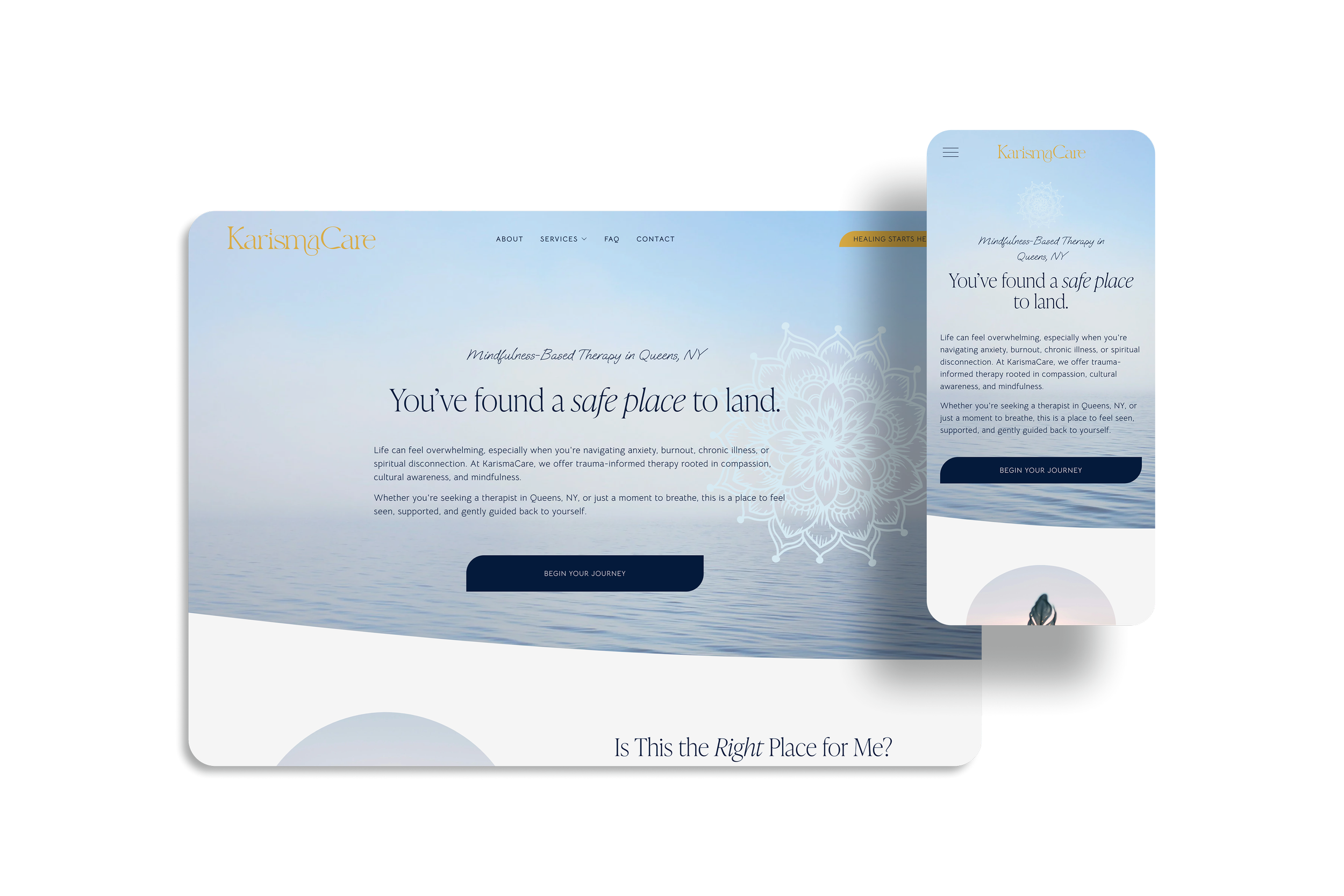
KarismaCare is a beautiful example of a brand and website working together as a cohesive presence. Every detail feels intentional, personal, and grounded in the heart behind the work, creating an experience that unmistakably feels hers before a single conversation begins.



A THOUGHTFUL Website
Should Also Make Life EASIER.
Emotional connection matters. So does clarity. Your website should help prospective clients understand what you offer, help referral partners find the right information, and help you spend less time answering the same questions over and over again.
The best websites feel human on the surface and thoughtfully organized underneath.
A strategic website can include:
clear service pages for your specialties
streamlined inquiry and consultation forms
helpful FAQs for prospective clients
information for referral partners
simple integrations that support the way you actually work
Design Rooted in Empathy
Strategy Beneath the Surface.

I create therapist brands and websites with the same balance your work requires: warmth and structure, emotional intelligence and clarity, personality and professionalism.
Whether you are opening a new practice or realizing your current website no longer reflects the quality of your work, the process is designed to help you feel understood, guided, and genuinely supported along the way.

BEFORE + AFTER // THERAPIST WEBSITE DESIGNThe practice had grown. The website needed to catch up.
The original site was functional, but it no longer reflected the warmth, clarity, or personality behind the practice. The website redesign for Dr. Julie Heier brought the pieces into focus, creating a more thoughtful first impression and a website that feels easier to understand, easier to trust, and much more like the person behind the work.


before  |  after
Drag to reveal the redesign.
click here to view the project
Questions Therapists Ask Before Working With Me
Have a question that's not answered here? Reach out. I'm happy to talk through whether this is the right fit before you commit to anything.
Do therapists need their own website, or is a Psychology Today profile enough?
A Psychology Today profile is worth having — it's a high-authority directory that shows up in Google results, and if it links to your website, it's a useful SEO signal. But a profile and a website are doing fundamentally different jobs. A directory gives every therapist the same format, the same layout, the same experience. Your own website speaks directly to the specific person you most want to work with, in your voice, with your story.
Therapists who rely solely on a profile are building on someone else's platform — at their price, on their terms, subject to their algorithm. Lately, more therapists are finding that profile referrals have slowed. Your website is an asset you own. It compounds over time in a way a listing never will.
Can't I just buy a Squarespace template and customize it myself?
You absolutely can. Honestly, when I was starting my photography business fifteen years ago, that's exactly what I did. It worked…for a while. Then I found myself tweaking it into oblivion, spending hours on something that still didn't feel right, until I finally hired a designer. The relief of handing it off (of not having to figure out what to say, where to put it, or why it wasn't converting) was immediate. I could focus on my actual work and let someone else do theirs.
The pattern I see most often: therapists buy a template, realize customizing it is harder than it looked, spend months frustrated, and end up hiring someone a year or two later anyway. Same outcome, more time lost, more mental energy spent. The question isn't really "template or designer." It's "do I want to spend the next year figuring this out, or do I want it done and off my plate?"
How much does a therapy website cost?
At AFOTIK, therapy website projects start at $1,490 for therapists who already have their branding and copy in place and need someone to bring it together into a cohesive, professionally designed site. If you need copy written as part of the project, it starts at $1,890. Full brand identity and website together starts at $2,490. Most therapists find that the investment pays for itself relatively quickly once their site is doing the work of attracting and pre-qualifying the right clients before they ever reach out.
What does the process actually look like?
It starts with a deep dive: questionnaires and a discovery conversation designed to pull out the real heart of your practice, not just the surface-level "what do you do." From there, I handle the strategy, the design, and — if it's part of your project — the copy. You review, give feedback, and we refine.
Most therapy website projects take six to eight weeks from kickoff to launch. You stay involved in the decisions that matter and hand off the rest. By the time we're done, you have a website that feels like an extension of your practice — and you haven't had to figure out a single thing about Squarespace.
For a sneak peek into the process, check out the client portal for AFOTIK’s signature offering, The FOUNDATION.
Ready to talk it through? Book a free discovery call.
Let’s create a practice presence that feels more like you.
A website can be beautiful, strategic, and quietly personal at the same time. Let’s build something that helps the right people feel a little more certain they have landed in the right place.