
Should I Hire a Designer or DIY My Website? An Honest Answer from an Orange County Brand Designer
By Amber Castro, Brand + Web Designer | AFOTIK Creative Studio | Orange County, CA
TLDR: DIY works if you need a one-pager or genuinely can't afford a designer yet. But if you're in a competitive market (hi, OC), trying to connect with clients who are already searching with real intent, and spending more hours than you'd like to admit tweaking a template that still doesn't feel right, you've probably already crossed the line.
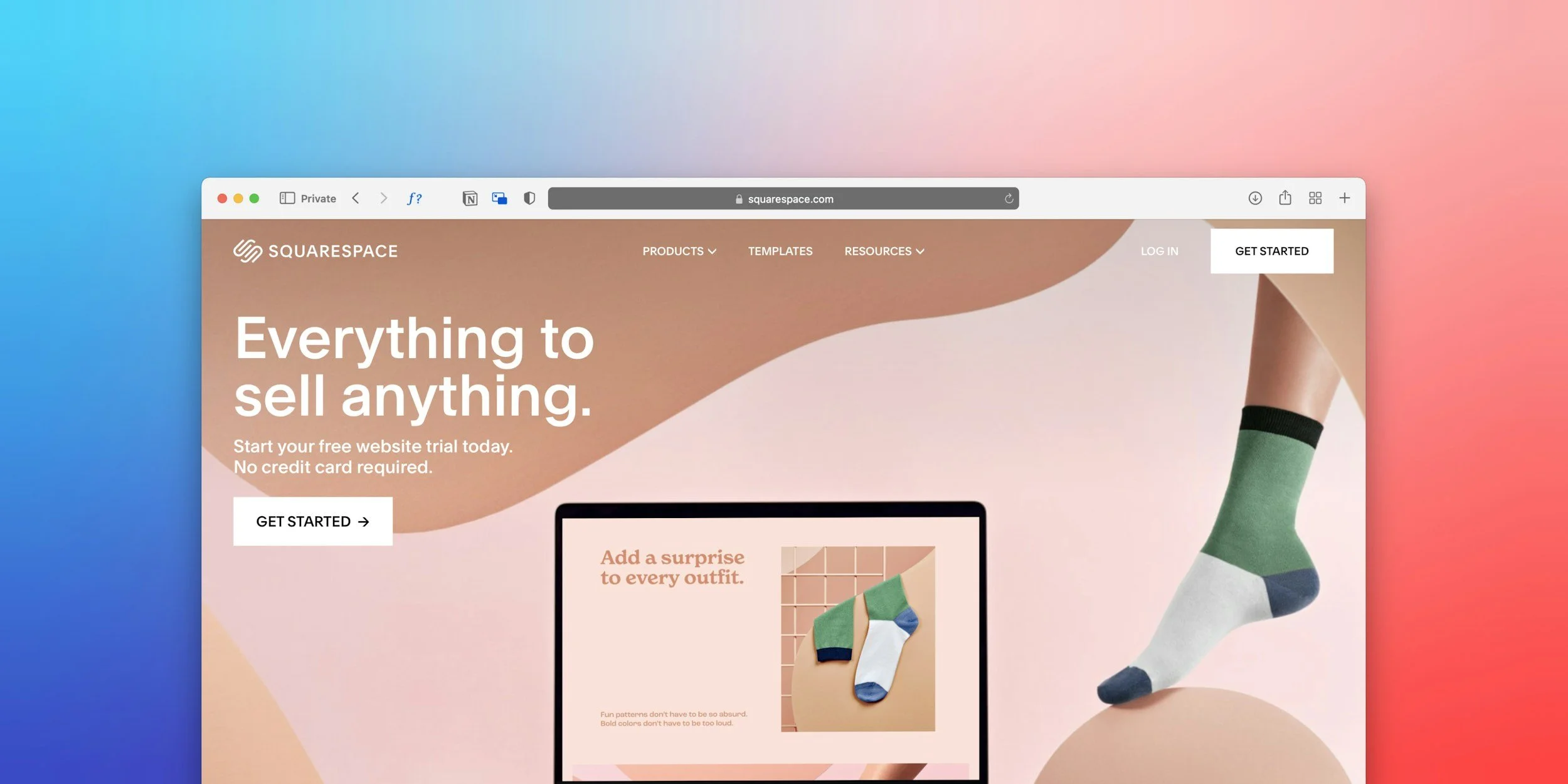
The question comes up constantly, and I get why. Squarespace makes it look so manageable. The templates are pretty. The drag-and-drop is right there. How hard could it be?
I know because fifteen years ago, when I was running my photography business, I did exactly that. Bought a template, customized it, convinced myself it was good enough. And it was…for a while. Then I found myself spending hours tweaking things that still didn't feel right, second-guessing every font choice, wondering why it wasn't bringing in the clients I wanted. When I finally hired a designer, the relief was immediate. Not because the site was suddenly prettier, but because I could stop thinking about it and get back to my actual work.
That pattern is what I see in my studio every week. So let me give you a real answer.
When DIY Is Actually Fine
I'm not going to pretend every business needs to hire a designer. That's not true, and you'd see right through it.
DIY makes sense if:
You need a simple one-page site to establish a presence. You're early stage, pre-revenue, or working with a genuinely tight budget. You don't have a ton of services to explain. Your goal is "I exist online" rather than "I want this to actively bring me clients."
If that's you, here's my honest advice: pick a template that already feels close to your brand, and leave it mostly alone. The biggest mistake DIYers make is moving everything around. That's when things go sideways: the pages stop matching, the mobile version breaks, it starts feeling like a quilt someone assembled in the dark. Less is more. Focus your energy on the words, not the layout. Make your message clear. That will serve you better than any design tweak.
And if cost is genuinely the barrier, I offer payment plans. It's worth asking.
When DIY Stops Working
Here's what "it's not converting" actually looks like behind the scenes when I get into a DIY site:
The structure is built around visual preference, not function. Headings are chosen by size, not hierarchy. An H3 is used because it looked right, not because it's a subheading under an H2. To a human reader, that's invisible. To a search engine trying to understand your page, it's a mess. Google reads your heading structure to understand what your page is about. If your H1 is buried, repeated, or missing entirely (and on most DIY sites, it is), you're starting behind before anyone even visits.
There are no SEO page titles or meta descriptions. This is the thing no one tells you to set up, so almost no one does. That means Google is guessing what to show in search results, and it usually guesses wrong.
The copy is talking to the wrong person. More on this in a minute, because it's the one that costs the most.
The Copy Problem (Especially for Therapists)
This is the thing I see most consistently with therapists who've built their own sites, and it's not a criticism; it's structural.
When you write your own website, you naturally write about what you know: yourself. Your credentials, your certifications, your modalities, your years of training. And all of that matters. But it's not what someone reads at 11pm when they finally admit they need help.
The person searching for a therapist isn't browsing the way someone shops for a new restaurant. There's real intent behind that search. They're in something. They're looking for someone who understands their specific situation, not someone with the most impressive LinkedIn summary. When the first thing they read on your site is your master's degree and your specialization in EMDR, they haven't yet felt seen. They've read a résumé.
The websites that convert lead with the person on the other side of the screen. They name the situation. They make the reader feel like someone finally gets it, before they even introduce themselves.
That shift in perspective is hard to make when it comes to your own work. It's not a skill gap, it's a proximity problem. You're too close to it.
→ If you're a therapist weighing your online options, this post on Psychology Today profiles vs. having your own website breaks down the tradeoffs in detail.
What Orange County Specifically Requires

Southern California is an affluent market with a discerning clientele. People here have the money to spend. But they want you to earn it. That creates a specific dynamic.
If your product or service is exceptional enough to stand on its own, maybe a mediocre website gets you by. That's rare, but it exists. For most businesses, though, your website is the first impression in a market where first impressions are doing a lot of work.
The other factor: saturation. In Orange County, almost every service industry is crowded. When ten therapists, three branding coaches, and a handful of wellness studios all use variations of the same Squarespace template (and many of them do) you stop standing out. You just become part of the strip mall. Every storefront looks the same, so people shop by price. If you look like your competitors and they're charging less, you lose on price before you ever get to show them what you do.
Differentiation isn't a nice-to-have in this market. It's the whole game.
What Happens When Someone Hires a Designer Instead
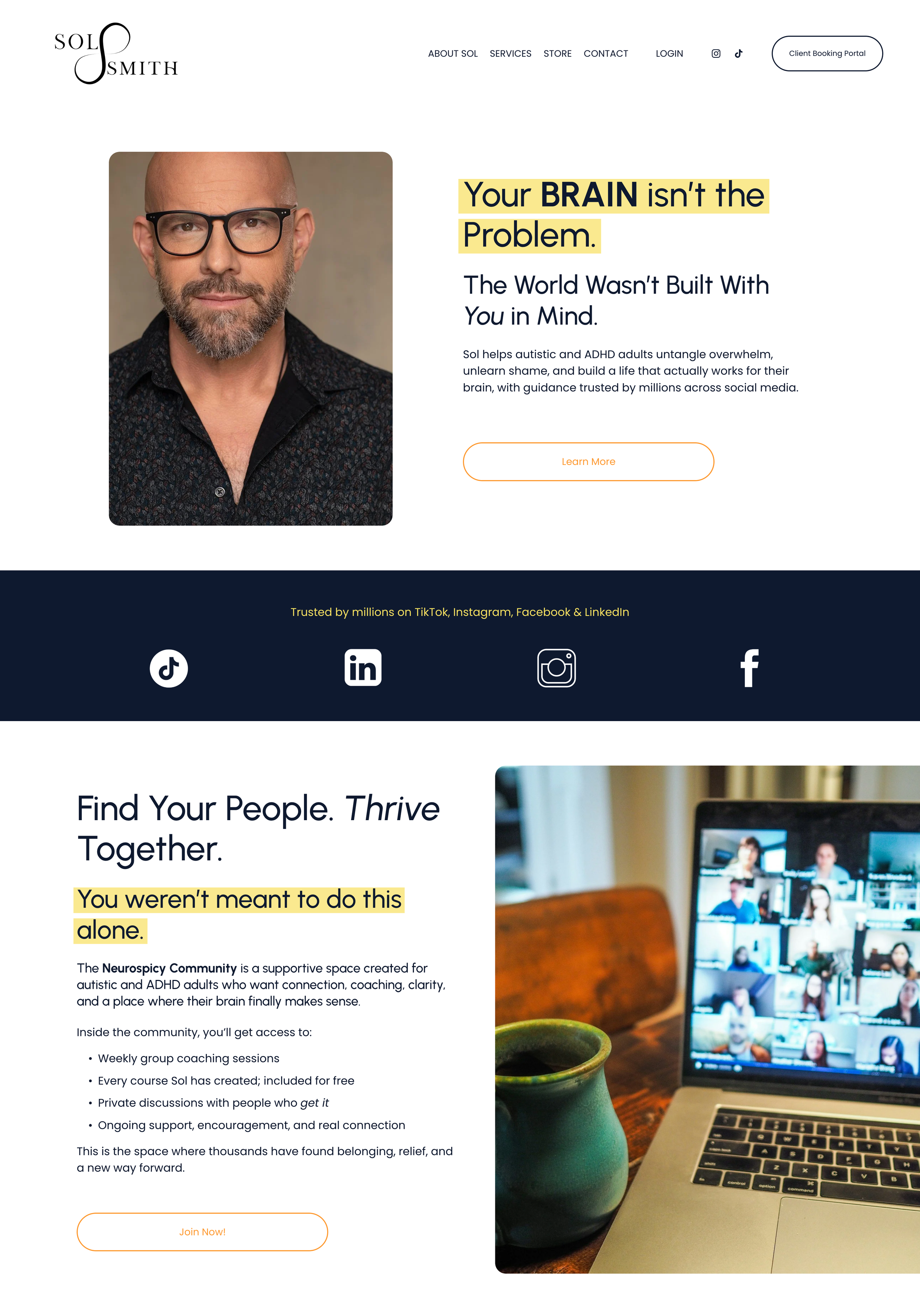
Sol came to me as a life coach who had been running his own site and doing okay…but not great. He knew something was off; he just couldn't put his finger on what. Here's what he said after we worked together:
"To this day, there's a hefty percentage of emails I receive that do little more than compliment how great my site looks. Before working with Amber, I knew that I wouldn't spend money on a site that looked like mine — I couldn't nail down what was wrong with it, but it wasn't professional, to be sure. Amber worked closely with me to make sure my site was everything I wanted it to be, but went a few hundred steps further than that by making suggestions and expansions that I never would have thought of."
He also mentioned that his website was a huge part of how he was able to quit his job and go full-time as a life coach.
That's the thing about a site that actually works: it's not just prettier. It does something. It brings people in, it builds trust before they ever reach out, and it lets you charge what your work is actually worth.
→ See how AFOTIK approaches brand and web design for service businesses like Sol's.
The Real Question
The framing of "DIY vs. designer" makes it sound like a budget decision. Sometimes it is. But more often, the real question is: how long do I want to spend figuring this out before I get the result I need?
The pattern I see most often, across therapists, coaches, wellness professionals, and small business owners throughout Orange County, is that they DIY, get frustrated, spend months tweaking, and eventually hire someone anyway. Same outcome, more time lost, more mental energy spent on something that wasn't their job in the first place.
→ Ready to stop figuring it out alone? Here's what working with AFOTIK looks like.
FAQ: Should I Hire a Designer or DIY My Website?
Is it worth hiring a web designer for a small business?
For most small businesses, yes. Especially once you're past the "I just need to exist online" stage. A designer brings structural knowledge (heading hierarchy, SEO setup, mobile optimization), strategic copy direction, and visual coherence that most business owners don't have time to develop. The question is less "is it worth it" and more "is now the right time." If you're trying to actively grow, bring in better clients, or compete in a saturated market like Orange County, now is probably the time.
How much does a website designer cost for a small business?
It varies widely. At AFOTIK, website-only projects start around $1,500. Full brand and website packages start at $2,490. Payment plans are available. The better frame for the cost: compare it to what you'd spend in time, frustration, and missed inquiries over the next year trying to get a DIY site to do the same thing.
Can I build a professional website myself with Squarespace?
You can build a functional website with Squarespace. Whether it becomes a professional, converting one depends on skills most business owners don't have yet: heading structure, SEO configuration, copy that speaks to the right person, and design consistency across pages and devices. The platform is capable; the skill gaps are in strategy and structure.
What's the biggest mistake people make when DIYing a website?
Two things, usually together: writing copy that focuses on themselves instead of their client, and moving things around in the template until the design falls apart. Pick a template that's close to what you want and leave the layout mostly alone. Put your energy into the words.
How do I know if my current website is hurting my business?
A few signals: you hesitate before sending someone to your site. You get traffic but few inquiries. The pages look inconsistent with each other. You've never set up SEO page titles or descriptions. You don't know what your H1 is. If any of those landed, it might be worth a conversation.
Do I need a brand identity before building a website?
Not always, but it helps. When your visual identity (colors, fonts, logo) and your website are built together, the result is cohesive in a way that's hard to retrofit later. If you already have a brand you're confident in, building the website separately is fine. If your brand is also a work-in-progress, doing both at once is usually more efficient and more effective.
What should I look for when hiring a web designer?
Portfolio work in your industry or for a similar type of client. A clear process so you know what to expect. Someone who asks questions about your audience and goals, not just your aesthetic preferences. And pricing that's transparent enough that you're not guessing until the proposal arrives.
Ready to stop spending weekends on your website?
If you're at the point where the DIY isn't cutting it (or you want to skip that phase entirely), I'd love to talk. I work with small business owners and therapists throughout Orange County and beyond, and I offer a free consultation to figure out if we're a good fit before anything else.
→ Schedule your free consultation here.
Amber Castro is the founder of AFOTIK Creative Studio, a brand and web design studio based in Orange County, California, specializing in brand identity and Squarespace web design for women-led small businesses, therapists, and wellness professionals.
